Delhi University Is Government or Private?
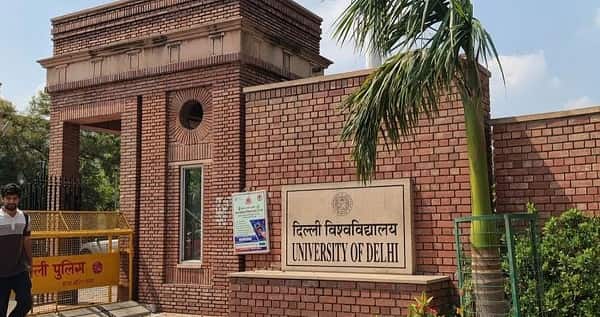
Delhi University is government, not private. More correctly, the University of Delhi is a central public university located in New Delhi, and it was established in 1922 by an Act of the Central Legislative Assembly.
Delhi University, popularly known as DU, is one of the most famous universities in India. Students know it for colleges like Hindu College, St. Stephen’s College, Miranda House, SRCC, Hansraj College, Ramjas College, Kirori Mal College and many others. Because DU has many affiliated colleges, and some colleges have their own identity, many students get confused about its status. But the answer is clear: Delhi University is a government/central public university, not a private university.
Delhi University Quick Reference
| Point | Details |
| Full Name | University of Delhi |
| Popular Name | Delhi University / DU |
| Type | Government / Central Public University |
| Location | New Delhi |
| Established | 1922 |
| Established By | Act of the Central Legislative Assembly |
| Private University? | No |
| Chancellor | Vice President of India |
| Main Admission Mode | CUET-based admission for many UG courses |
| Study System | Regular colleges, university departments and School of Open Learning |
| Known For | Top colleges, affordable education, academics, student life and national reputation |
Why DU’s College System Creates Confusion
Delhi University’s status becomes confusing because DU is not just one campus like many private universities. It is a large collegiate university. That means DU has university departments, faculties and many affiliated colleges. A student may say, “I study in Hindu College,” “I study in Miranda House,” or “I study in SRCC,” but these colleges are still part of the Delhi University system.
This college-based structure makes DU look different from a normal university. Some colleges are old, famous and independent in their daily functioning. They have their own principals, faculty, campus culture and admission cut-offs or seat systems. Still, the degree is awarded under the University of Delhi.
Another reason is that some DU colleges are fully funded, some are trust-managed, and some have special histories. This does not change DU’s status. The university itself remains a central public university.
Why Delhi University Is a Government University
Delhi University is a government university because it was created by law and belongs to India’s central university system. Public records describe DU as a collegiate central university founded in 1922 by an Act of the Central Legislative Assembly.
A private university is usually started and managed by a private sponsoring body, trust, company or education group. DU is different. It has a public legal identity and is connected with the central higher education system.
DU’s top constitutional positions also show its public character. The Vice President of India serves as the Chancellor of the University of Delhi, and the President of India is the Visitor of the university. This type of structure is not seen in ordinary private universities.
How Is the Study System in Delhi University?
The study system in DU depends on where a student studies. A student may study in a regular DU college, a university department, or the School of Open Learning. Regular colleges usually follow classroom teaching, tutorials, practicals, internal assessment, semester exams, presentations and assignments.
DU is especially famous for undergraduate education in arts, commerce, science and humanities. Courses like B.Com, B.Com Honours, BA Programme, BA Honours, B.Sc, Economics, English, Political Science, History, Psychology, Mathematics and Computer Science are very popular.
For postgraduate and research students, DU has university departments and faculties. The university has a large academic structure with many faculties and departments across North Campus and South Campus.
DU also has the School of Open Learning, commonly called DU SOL. It is useful for students who want distance-mode education under the Delhi University system. DU SOL was established in 1962 and works as a constituent school of the University of Delhi.
How Are the Teachers at Delhi University?
Teachers in Delhi University colleges and departments are generally well-qualified and selected through formal academic procedures. Many DU teachers are involved in classroom teaching, research, seminars, publications, student mentoring and academic development.
In top DU colleges, the teaching environment can be very strong because of good faculty, serious students, academic competition and active campus culture. Colleges like SRCC, Hindu, Miranda House, St. Stephen’s, Hansraj, Kirori Mal and Lady Shri Ram have strong reputations because of their academics, faculty quality, student crowd and alumni network.
However, like every large university system, quality can vary from college to college and department to department. A student should not choose only by the DU name. Course quality, college reputation, faculty, location, placement cell, crowd and personal goals should also be checked.
Do Students Pay Fees in Delhi University?
Yes, students pay fees in Delhi University. But paying fees does not make it private. Government universities also charge admission fees, tuition fees, examination fees, practical fees, hostel fees and other charges.
One major advantage of DU is that many regular college courses are still more affordable than expensive private universities. This is one reason DU remains popular among middle-class students across India.
Fees can differ depending on the college, course, category, hostel and facilities. Professional or self-financed courses may cost more than regular traditional courses. Students should always check the latest fee structure of the specific DU college and course.
Advantages of Delhi University
- Central public university with strong national reputation.
- Large number of reputed colleges under one university system.
- Strong options in arts, commerce, science, humanities and social sciences.
- Affordable fee structure in many regular courses.
- Good student life, societies, debates, cultural events and campus exposure.
- Strong alumni network in politics, business, civil services, media, academics and corporate sectors.
- Useful for students preparing for higher studies, government exams and professional careers.
Frequently Asked Questions
Q: If I study in a DU college, will my degree mention Delhi University?
A: Yes. If the college and course are under the University of Delhi system, the degree is awarded by Delhi University. The college gives the academic environment, but the university gives the final degree.
Q: Is DU better for arts and commerce than engineering?
A: DU is especially famous for arts, commerce, humanities, social sciences and science courses. For engineering, students usually compare institutes like IIT, NIT, DTU, NSUT and IIIT Delhi more seriously, depending on rank and branch.
Q: What is the difference between DU regular college and DU SOL?
A: DU regular college means daily classroom-based learning through a college campus. DU SOL is distance-mode learning, where students study with more flexibility. Both come under Delhi University, but the study experience is very different.
Q: Are all DU colleges equally good?
A: No. DU colleges are not equally strong. Some colleges have better faculty, placements, societies, campus life and reputation. Students should compare course, college ranking, location, fee, placement support and student reviews before admission.
Q: Is Delhi University useful for government job preparation?
A: Yes, DU can be useful for students preparing for UPSC, SSC, banking, teaching and other government exams. Many DU students prepare for competitive exams because Delhi offers coaching, libraries, peer groups and exposure.
Final Answer
Delhi University is government, not private. It is a central public university in New Delhi, established in 1922 by an Act of the Central Legislative Assembly. The confusion mainly happens because DU has many colleges with separate identities, but the university itself is government/public. Its main strengths are reputed colleges, affordable education, strong academics, good teachers, active student life and powerful national recognition.