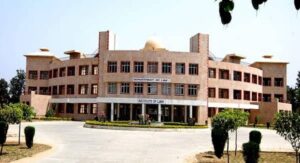
HBTU Is Government or Private?
HBTU is government, not private. Harcourt Butler Technical University, Kanpur is a state government technical university in Uttar Pradesh. It was earlier known as Harcourt Butler Technological Institute, or HBTI, and was upgraded to university status through Act No. 11 of 2016 by the Government of Uttar Pradesh.
HBTU has a strong name in North India, especially among engineering students. Many students still call it HBTI because of its old legacy. It is known for engineering, chemical technology, research, technical education and its long history since 1921. Because it has university status, its own admission system and a separate campus identity, some students wonder whether it is private. But the answer is clear: HBTU is a government/state public university, not a private university.

HBTU Quick Reference
| Point | Details |
| Full Name | Harcourt Butler Technical University |
| Popular Name | HBTU Kanpur |
| Earlier Name | Harcourt Butler Technological Institute / HBTI |
| Type | Government / State Technical University |
| Location | Kanpur, Uttar Pradesh |
| Origin | Started as a technical institute in 1921 |
| University Status | Upgraded under UP Government Act No. 11 of 2016 |
| Private University? | No |
| Main Courses | B.Tech, M.Tech, MCA, MBA, M.Sc and PhD |
| Known For | Engineering, chemical technology, research, legacy and technical education |
Why HBTU’s Old Name Creates Confusion
HBTU’s status can confuse students because many people still know it by its older name, HBTI. Earlier, it was a technical institute. Later, it became Harcourt Butler Technical University. So when students hear different names like HBTI, HBTU or Harcourt Butler, they sometimes think these may be different institutions.
In reality, HBTU is the university form of the old HBTI legacy. The official university profile says Harcourt Butler Technical University was formerly Harcourt Butler Technological Institute, Kanpur, and has been active in science and technology since 1921. It further states that, as per Act No. 11 of 2016 by the Government of Uttar Pradesh, it was upgraded to Harcourt Butler Technical University, Kanpur.
Another reason is that HBTU is not like an ordinary affiliated college. It is a university with its own departments, academic structure, examinations and courses. That strong independent identity can make some students compare it with private universities. But its legal status is government/state public.
Why HBTU Is a Government University
HBTU is a government university because it was upgraded to university status by the Government of Uttar Pradesh through a state Act. A private university is usually created and managed by a private sponsoring body, trust or education group. HBTU is different. It belongs to the state public technical university system.
The university was established with the aim of becoming a leading residential university and a centre of excellence in engineering, technology, basic and applied sciences, humanities, social science, management and professional courses. This clearly shows that HBTU is not a private business-style education institution. It is a public technical university with a government-backed identity.
How Is the Study System in HBTU?
The study system in HBTU is mainly technical, practical and engineering-focused. Students study through classroom lectures, labs, workshops, projects, assignments, seminars, exams and research-related activities. Since it is a technical university, practical learning matters a lot.
HBTU has schools such as the School of Engineering, School of Chemical Technology, School of Basic & Applied Sciences and School of Humanities and Social Sciences. The official university page also mentions that HBTU promotes study, research and innovation in engineering areas and skill development through continuing education.
One strong feature of HBTU is its chemical technology background. The university offers B.Tech programmes in branches such as Computer Science, Civil, Electrical, Electronics, Mechanical, Information Technology, Chemical Engineering, Food Technology, Oil Technology, Paint Technology, Plastic Technology and other specialised branches. This makes HBTU different from many general engineering colleges.
How Are the Teachers at HBTU?
Teachers at HBTU are generally involved in technical education, laboratory guidance, project work, research and academic development. In engineering universities, teachers are expected not only to explain theory but also to guide students in practical application.
The official university profile mentions that faculty members have contributed research papers in Indian and international journals, and many research and development schemes sponsored by bodies such as DST, UGC, ICAR, DRDO, UPCST and CSIR have been completed. This shows that the university has a research-based academic environment, not only a classroom-based teaching system.
At the same time, HBTU students need strong self-study habits. Like any good engineering institute, teachers can guide, but students must work on coding, concepts, lab records, internships, projects and placement preparation by themselves.
Do Students Pay Fees in HBTU?
Yes, students pay fees in HBTU. But paying fees does not make a university private. Government universities also charge tuition fees, examination fees, hostel fees, mess charges and other academic expenses.
The difference is ownership and legal status. HBTU is a state government technical university. Its fees may be higher than some older government colleges and lower than many private universities, depending on the course and category. Students should always check the latest official fee notice before admission.
Frequently Asked Questions
Q: Is HBTU and HBTI the same?
A: HBTI was the old name of the institution. After being upgraded to university status, it became Harcourt Butler Technical University, or HBTU.
Q: Does HBTU have only engineering courses?
A: No. HBTU is mainly known for engineering and technology, but it also offers courses such as MBA, MCA, M.Sc and PhD programmes.
Q: Is HBTU good for chemical engineering and related branches?
A: Yes, HBTU has a strong old reputation in chemical technology and related branches like oil, paint, plastic, food and biochemical engineering. These branches are part of its special academic identity.
Q: Does HBTU affiliate other colleges?
A: HBTU works mainly as a university with its own academic departments and programmes. It is not known like a large affiliating university such as AKTU.
Q: Is HBTU better than a private engineering college?
A: In many cases, HBTU can be a better value than average private engineering colleges because of its government status, old legacy, technical reputation and specialised branches. But the final comparison depends on branch, fees, placement record and student goals.