Critical Analysis of Secondary School Curriculum in India
Secondary school is one of the most important stages in a student’s life. It is the stage where a child slowly moves from basic learning to serious academic understanding, career awareness, personality development and social responsibility. In India, secondary education generally covers Classes 9 and 10, while the larger secondary stage under the newer school structure also includes Classes 11 and 12. The National Education Policy 2020 introduced the 5+3+3+4 structure, where the secondary stage covers ages 14 to 18 and aims to offer more flexibility, critical thinking and subject choice.
The secondary school curriculum in India has improved over time. It now includes languages, mathematics, science, social science, computer education, art, health, physical education and vocational exposure. The National Curriculum Framework for School Education 2023 also supports a broader, more balanced and skill-based approach to school learning. But the real question is: does the curriculum truly prepare students for life, or does it still remain too marks-oriented? A critical analysis shows both progress and serious gaps.
Meaning of Secondary School Curriculum
A secondary school curriculum means the planned subjects, activities, values, skills and learning experiences provided to students at the secondary level. It is not only about textbooks. It includes teaching methods, examinations, practical work, moral education, sports, arts, discipline, projects and career guidance.
A good curriculum should help students understand the world, think independently, communicate well, solve problems and prepare for higher education or work. In India, the curriculum has these goals on paper, but classroom reality often looks different.
Strengths of the Secondary School Curriculum in India
1. Wide Range of Subjects
One major strength of the Indian secondary school curriculum is that it gives students knowledge of many subjects. Students study science, mathematics, social science, languages and sometimes computer education. This gives them a broad foundation.
Science develops observation and logical thinking. Mathematics builds reasoning and problem-solving ability. Social science helps students understand history, geography, politics, economics and society. Language subjects improve communication and expression. In this way, the curriculum tries to create balanced learners.
2. Focus on National Identity and Social Awareness
The curriculum also helps students understand India’s history, culture, Constitution, democracy and social diversity. Through social science and language textbooks, students learn about freedom struggle, equality, secularism, environment, gender sensitivity and citizenship.
This is important because education should not only produce job seekers. It should also create responsible citizens. A student must know society, not just formulas and facts.
3. Growing Importance of Skills and Vocational Education
In recent years, more attention has been given to skill-based learning and vocational subjects. The newer educational vision encourages students to connect knowledge with real life. Vocational education, internships, project work and multidisciplinary learning are being promoted through recent reforms.
This is a positive change because every student may not follow the same academic path. Some may become engineers, doctors or teachers, while others may choose business, design, technical work, sports, agriculture, hospitality or digital careers.
4. Inclusion of Technology
Technology has slowly become part of secondary education. Digital classrooms, online learning platforms, smart boards, educational apps and online resources are now used in many schools. This helps students access wider knowledge beyond textbooks.
However, this benefit is not equal everywhere. Urban and private schools usually get better access, while many rural and government schools still struggle with internet, devices and trained teachers.
Weaknesses of the Secondary School Curriculum in India
1. Too Much Pressure of Examinations
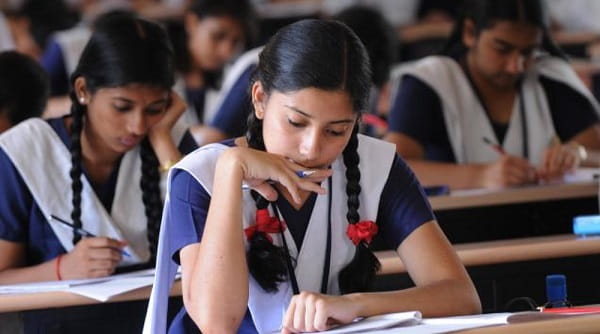
The biggest weakness of the secondary school curriculum is its heavy connection with board exams. In Classes 9 and 10, students often study mainly to score marks. Parents, teachers and schools also give more importance to marks than real understanding.
Because of this, learning becomes stressful. Students memorise answers, solve sample papers and chase grades. Many students know how to write an answer in the exam, but they cannot explain the same concept in their own words. This shows a gap between education and understanding.
2. Rote Learning Still Dominates
Although policies speak about critical thinking and creativity, rote learning is still common in many classrooms. Students are often asked to remember definitions, long answers, dates, formulas and textbook lines.
This weakens curiosity. A child may pass the exam but may not develop the ability to question, analyse or apply knowledge. True education should make the student think, not just repeat.
3. Lack of Practical and Life-Based Learning
Many topics in the curriculum are useful, but the way they are taught is often too theoretical. Science is taught from books, but experiments may be limited. Social science is taught through memorisation, not discussion. Mathematics is taught through formulas, but real-life application is not always clear.
Life skills like financial literacy, emotional control, communication, decision-making, legal awareness, health awareness and career planning are still not given enough importance in many schools. Students may know about ancient history or chemical reactions, but they may not know how to manage stress, use money wisely or choose a career properly.
4. Unequal Curriculum Experience
India may have a national curriculum vision, but the learning experience is not equal for all students. A student in a good private school may get trained teachers, labs, sports, projects and digital exposure. A student in a weak rural or slum school may only get basic textbook teaching.
This creates educational inequality. The same syllabus does not mean the same education. Curriculum becomes meaningful only when facilities, teachers and learning environment are also strong.
5. Limited Career Guidance
Secondary school is the stage where students begin thinking about their future. But many Indian schools do not provide proper career counselling. Students often choose streams or subjects because of parental pressure, marks, friends or social image.
Many students still think only of common careers like engineering, medicine, government jobs or commerce. They do not get enough exposure to modern fields like data science, design, animation, sports management, psychology, digital marketing, entrepreneurship, environment studies or vocational careers.
6. Teacher-Centred Classroom
In many schools, the teacher speaks and students listen. This method may help in completing the syllabus, but it does not always develop confidence and independent thinking. Students need debates, group work, projects, presentations, experiments and field activities.
A secondary school student should be allowed to ask questions. But in many classrooms, questioning is treated as disturbance. This harms creativity and self-expression.
7. Overloaded Syllabus
Another serious problem is syllabus load. Students often have too many chapters, assignments, tests and coaching classes. The pressure becomes worse during board exam years.
An overloaded curriculum leaves little space for sports, art, reading, hobbies and rest. Education should develop the full personality of a child, but excessive academic pressure can make students anxious and tired.
Critical View of Recent Reforms
Recent reforms like NEP 2020 and NCF 2023 try to correct many old weaknesses. They support flexibility, skill education, holistic development, multilingual learning, critical thinking and reduced separation between academic and vocational subjects. This is a welcome shift.
But the real challenge is implementation. India has many boards, many languages, many types of schools and huge social differences. A good policy cannot succeed unless teachers are trained, schools are funded, exams are improved and parents also change their marks-focused mindset.
What Should Be Improved?
The secondary school curriculum in India needs more practical learning. Every subject should be connected with real life. Science should include experiments. Mathematics should include application. Social science should include discussion on current issues. Language should include speaking, writing and creative expression.
The examination system should also change. Instead of testing memory, exams should test understanding, application and originality. Vocational education should not be treated as inferior. It should be respected equally.
Schools also need stronger career counselling, mental health support, sports, arts and digital training. Most importantly, teacher training must improve because no curriculum can succeed without good teachers.
Conclusion
The secondary school curriculum in India has many strengths. It gives students a broad academic base, teaches social values and is slowly moving towards skill-based and flexible learning. Recent reforms have created hope for a better future.
But the curriculum still suffers from exam pressure, rote learning, unequal facilities, weak practical exposure and lack of career guidance. The problem is not only what is written in the curriculum, but how it is taught in the classroom.
A truly good secondary school curriculum should prepare students not only for board exams, but for life. It should create confident, skilled, thoughtful and responsible young people. India has already made strong educational plans. Now the real need is honest implementation in every school, for every child.