IIT Is Government or Private?
IIT is a government institute, not a private college. The Indian Institutes of Technology are public technical institutions supported by the Government of India and recognised as Institutes of National Importance.
The name IIT has a special power in India. For students, it is not just a college name; it is a dream, a challenge and a mark of academic excellence. Many parents and students know that IITs are famous for engineering, placements and tough admission, but they still get confused about one basic question: is IIT government or private? The clear answer is that IITs are government-backed institutions, but their education system is much more advanced and independent than ordinary colleges.
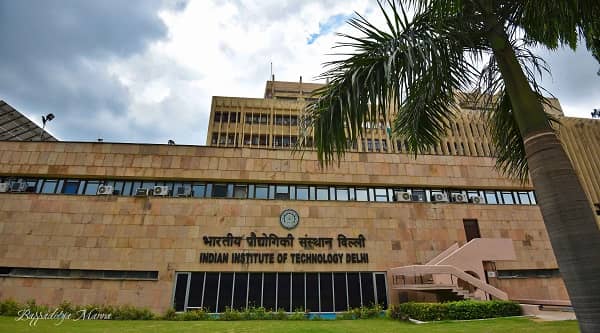
IIT Quick Reference
| Point | Details |
| Full Form | Indian Institute of Technology |
| Type | Government / Public Institute |
| Controlled By | Ministry of Education, Government of India |
| Status | Institute of National Importance |
| Total IITs in India | 23 IITs |
| B.Tech Admission | Through JEE Advanced |
| Private Quota | No |
| Donation Admission | No |
| Main Courses | B.Tech, M.Tech, M.Sc, PhD and research programmes |
| Known For | Engineering, research, innovation, startups and placements |
What Makes IIT Different from Other Colleges?
IITs are different from ordinary engineering colleges because they are built as national-level institutions. Their purpose is not only to provide degrees, but also to create engineers, researchers, scientists, entrepreneurs and technology leaders. The official IIT system lists education, research, projects, publications, patents, research facilities and collaborations as major parts of the IIT ecosystem.
The biggest difference is admission. IITs do not offer seats through donation or private management quota. For undergraduate engineering courses, students first qualify JEE Main and then appear for JEE Advanced. Only top-ranking students get admission. This tough selection process creates a very strong student group, and that student environment itself becomes a big reason behind IIT’s success.
Why IIT Is a Government Institute
IITs are government institutes because they are part of India’s public higher education system. They are not owned by a private company, business group or private trust. The IIT system works under a national framework, and the IIT Council includes important government and institutional members. The official IIT system page says the minister in charge of technical education in the Union Government acts as the chairman of the IIT Council.
The Institute of Technology Act also plays an important role. The IIT system states that the Institute of Technology Act, 1961 declared IITs as Institutes of National Importance and created a framework for their funding, admission and academic development. This is why IIT cannot be called a private college.
How Is the Study System in IIT?
The study system in IIT is not based only on textbook reading. Students attend lectures, tutorials, laboratory sessions, workshops, projects and research-based activities. In many courses, students are expected to solve real problems, build models, write code, prepare reports, work in teams and present their ideas.
The education style is tough, but it develops confidence. Students do not just memorise answers for exams. They learn concepts, apply formulas, test ideas, ask questions and work under pressure. This is one reason IIT graduates are respected in engineering companies, startups, research labs and global universities.
IITs also give importance to practical learning. Engineering students often work in laboratories, technical clubs, robotics groups, coding clubs, design teams and innovation cells. Many students also take part in internships, research projects and startup activities. This makes the learning environment active, competitive and career-focused.
How Are the Teachers at IIT?
Teachers at IIT are generally highly qualified. Most IIT faculty members have strong academic backgrounds, research experience and subject expertise. Many of them are involved in national and international research projects, publications, patents and industry collaborations.
The role of IIT teachers is not limited to classroom teaching. They guide students in projects, research papers, laboratory work, higher studies, innovation and sometimes startup ideas. A good IIT professor can shape a student’s thinking deeply because the teaching is connected with real engineering and scientific problems.
At the same time, IIT study is not spoon-feeding. Teachers guide, explain and mentor, but students also have to work hard on their own. This is a major difference between IIT and many average colleges. In IIT, self-study, problem-solving and curiosity matter a lot.
Do Students Pay Fees in IIT?
Yes, students pay fees in IIT, but paying fees does not make IIT private. Many government colleges and universities charge tuition fees, hostel fees, mess charges and examination fees. Ownership and fee payment are two different things.
IITs receive government support, and the IIT system mentions that IITs receive funds from the Government of India for recurring expenses and development of infrastructure and facilities. So even though students pay fees, IIT remains a government/public institution.
Are All IITs Government?
Yes, all IITs are government/public institutions. The IIT system includes well-known institutes such as IIT Kharagpur, IIT Bombay, IIT Madras, IIT Kanpur, IIT Delhi, IIT Guwahati, IIT Roorkee, IIT Hyderabad, IIT Bhubaneswar, IIT Patna, IIT Gandhinagar, IIT Indore, IIT Mandi, IIT BHU Varanasi, IIT Palakkad, IIT Tirupati, IIT Dhanbad, IIT Bhilai, IIT Goa, IIT Jammu and IIT Dharwad.
Older IITs are more famous because of their long history and strong alumni base. Newer IITs are also growing quickly with modern campuses, new departments and research facilities.
Advantages of IIT
- Government-backed funding that supports world-class labs, research facilities and infrastructure.
- No donation or management quota seats, keeping admission entirely merit-based through JEE Advanced.
- Highly qualified faculty actively involved in national and international research and patents.
- Strong industry collaborations leading to internships, live projects and excellent placement records.
- Recognition as an Institute of National Importance, valued by employers and universities worldwide.
- Active research culture and startup ecosystem through incubation centres and innovation cells.
Frequently Asked Questions
Q: Are all 23 IITs equally government-funded?
A: Yes, all 23 IITs are government institutions and receive funding from the Ministry of Education, though the amount of funding and the scale of facilities can vary based on each institute’s age, size and ongoing projects.
Q: Can a student get into IIT without clearing JEE Advanced?
A: For the main B.Tech programmes, JEE Advanced is required after qualifying JEE Main. Some postgraduate, PhD and specialised programmes have separate entrance routes such as GATE or institute-specific tests, but undergraduate engineering admission does not bypass JEE Advanced.
Q: Do private companies fund any part of IIT research?
A: Yes, IITs often collaborate with private companies for sponsored research, specific labs or innovation centres, but this project-level industry funding does not change the ownership or government status of the institute itself.
Q: Is an IIT degree more valuable than a degree from a private engineering college?
A: IIT degrees are generally highly regarded due to the tough admission process, strong faculty and research culture, but value also depends on the specific course, the student’s performance and the field of work, so it should not be the only factor considered.
Q: Why do IIT campuses look like private universities?
A: IITs are deliberately built with modern infrastructure, research labs and recreational facilities to match global academic standards, since they are meant to compete internationally; this investment comes from sustained government funding rather than private ownership.