Top 10 Most Difficult Exams in India
India is a country where competitive exams are not just exams; they are life-changing battles. For many students, one paper can decide admission, career, social status and financial stability. Some exams are difficult because of their huge syllabus. Some are difficult because lakhs of candidates compete for a few seats. Some test memory, some test logic, some test personality, and some test patience for many years.
The exams listed below are considered among the toughest in India in 2026 because of their competition level, syllabus depth, selection ratio, unpredictability and mental pressure.
1. UPSC Civil Services Examination
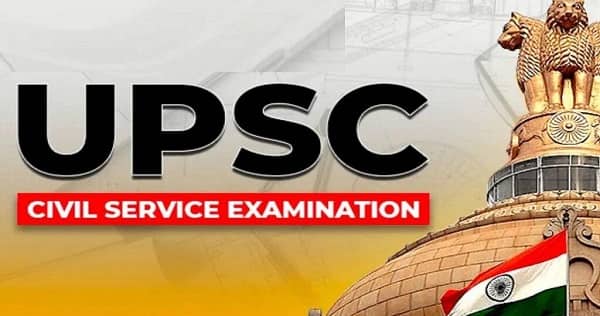
UPSC Civil Services Examination remains India’s toughest exam. It is conducted for top administrative services like IAS, IPS, IFS and other central services. The exam has three stages: Prelims, Mains and Personality Test. The real difficulty is not only the syllabus, but its vastness. History, polity, economy, geography, environment, ethics, current affairs and essay writing all come together in one exam. UPSC’s official portals continue to list civil services notices, results and application services, showing its structured multi-stage process.
What makes UPSC extremely hard is uncertainty. A candidate may study for years and still miss the cut-off by a small margin. It tests knowledge, writing ability, judgement, patience and emotional strength.
2. JEE Advanced
JEE Advanced is the gateway to the IITs and is one of the most difficult engineering entrance exams in the world. Only the top candidates from JEE Main can appear for it. For 2026, the official JEE Advanced eligibility page says candidates must be among the top 2,50,000 successful candidates in JEE Main B.E./B.Tech paper.
Its difficulty comes from concept-based Physics, Chemistry and Mathematics questions. The paper does not reward simple memorisation. It checks whether a student can think deeply, connect ideas and solve unfamiliar problems under pressure.
3. Chartered Accountant Exam
The CA exam conducted by ICAI is one of India’s toughest professional exams. It has different levels, including Foundation, Intermediate and Final. The journey is long, technical and mentally demanding. ICAI’s official exam section shows regular Foundation, Intermediate and Final exam updates, including May 2026 exam materials and result notices.
CA becomes difficult because students must master accounting, taxation, audit, law, finance and costing. The pressure increases because many students prepare along with articleship and practical training.
4. NEET UG
NEET UG is India’s biggest medical entrance exam for MBBS, BDS and other medical courses. It is difficult not only because of the syllabus, but because of the huge competition for limited medical seats. The official NEET portal for 2026 has carried notices related to admit cards, re-examination and candidate instructions.
The exam mainly tests Physics, Chemistry and Biology. Biology requires accuracy and memory, while Physics demands conceptual clarity. A small mistake can reduce rank sharply, making NEET one of the most stressful exams in India.
5. GATE
GATE is a highly respected exam for engineering graduates. It is used for admission to M.Tech, research programmes and recruitment in many public sector companies. The official GATE 2026 website lists IIT Guwahati as the organising institute and carries updates on results, scorecards, question papers and answer keys.
GATE is difficult because it tests core engineering knowledge in depth. The questions are technical, analytical and application-based. For top IITs and PSU jobs, even a small difference in marks can affect selection.
6. CAT
CAT is the main entrance exam for admission to IIMs and other top business schools. The official CAT website warns candidates to use only the official CAT portal, which shows the importance and scale of the exam process.
CAT is not syllabus-heavy like UPSC, but it is mentally tricky. Quantitative Aptitude, Data Interpretation, Logical Reasoning and Verbal Ability must be solved with speed and accuracy. The difficulty lies in time pressure and percentile-based competition.
7. RBI Grade B
RBI Grade B is one of the toughest banking and regulatory exams in India. It attracts serious candidates because the job is prestigious, well-paid and policy-oriented. The 2026 recruitment process opened through the IBPS registration system, with online registration running from April 29 to May 20, 2026.
The exam is difficult because it combines finance, economics, management, current affairs, English writing and interview performance. It is not a routine banking exam; it needs analytical understanding of India’s economy and financial system.
8. CLAT
CLAT is the main entrance exam for admission to National Law Universities. The Consortium of National Law Universities conducts CLAT, and 25 NLUs are part of the consortium.
CLAT is difficult because it tests reading speed, legal reasoning, current affairs, logical reasoning and comprehension. The paper may look simple at first, but the competition for top NLUs like NLSIU Bengaluru, NALSAR Hyderabad and WBNUJS Kolkata is very tough.
9. UGC NET/JRF
UGC NET is conducted for Assistant Professor eligibility and Junior Research Fellowship. The official UGC NET portal showed June 2026 exam updates, including admit card release, city intimation and registration notices.
The exam is difficult because candidates must prepare both general teaching-research aptitude and a specialised subject. JRF is especially tough because the cut-off is higher and competition is intense among postgraduate candidates.
10. ISI Admission Test
The Indian Statistical Institute Admission Test is one of India’s most difficult exams for students interested in mathematics, statistics and data science. The official ISI admission portal stated that the 2026 admission test was scheduled for May 10, 2026.
This exam is not as widely discussed as UPSC or NEET, but its questions are highly conceptual. It tests mathematical maturity, proof-based thinking and problem-solving ability. For students aiming at ISI’s top programmes, the challenge is extremely high.
Conclusion
India’s toughest exams are difficult for different reasons. UPSC tests patience and awareness. JEE Advanced tests deep concepts. CA tests professional discipline. NEET tests accuracy under huge competition. GATE, CAT, RBI Grade B, CLAT, UGC NET and ISI test specialised skills in their own ways.
The common factor is simple: these exams do not reward casual preparation. They demand clarity, consistency, discipline and mental strength. In 2026, these remain the exams that can truly test the limits of an Indian aspirant.