Top 10 Famous Music Schools & Colleges in India
India’s music tradition spans millennia — from ancient Vedic chants to Bollywood blockbusters and global streaming hits. In 2026, music is not just an art form but a thriving career industry fuelled by OTT platforms, independent labels, and live performance circuits. With over 600 music colleges nationwide, choosing the right institution is critical. This guide cuts through the noise and presents the Top 10 Famous Music Schools and Colleges in India for 2026 — ranked by academic reputation, faculty excellence, alumni impact, infrastructure, and industry relevance — to help aspiring musicians make their most important decision.
1. KM Music Conservatory (KMMC), Chennai
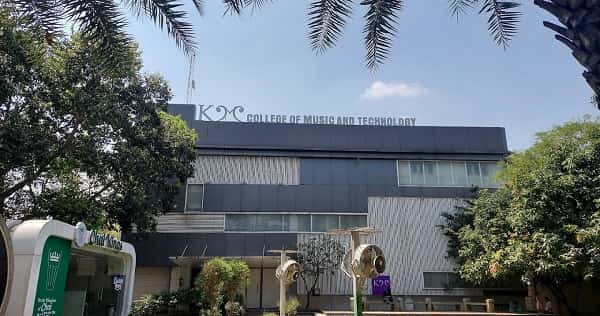
📍 Arumbakkam / Kodambakkam, Chennai, Tamil Nadu • Est. 2008 • Middlesex University, UK Affiliated | A.R. Rahman Foundation
Founded in 2008 by the A.R. Rahman Foundation, the KM Music Conservatory is India’s most celebrated contemporary music institution. Situated in the heart of Chennai’s film and music district, KMMC is the only Indian music school affiliated with a British university — Middlesex University, London — making its certificates globally recognised. Its international faculty, drawn from India, Europe, and the US, teaches Hindustani classical, Western classical, audio engineering, composition, and electronic music production. Students work in professional recording studios and have the rare opportunity to contribute to film scoring projects under A.R. Rahman’s direct mentorship.
In 2026, KMMC has expanded with a Mumbai campus, serving the entertainment capital’s growing demand for conservatory-trained professionals. Its library houses over 40,000 musical recordings, and the on-campus Sunshine Orchestra — a social outreach initiative for underprivileged children — reflects the institution’s broader human mission. For aspiring musicians who want world-class training at the crossroads of Indian tradition, Western technique, and cutting-edge music technology, KMMC remains the undisputed first choice in India.
2. Indira Kala Sangit Vishwavidyalaya (IKSV), Khairagarh
📍 Khairagarh, Rajnandgaon, Chhattisgarh • Est. 1956 • UGC-Recognised | NAAC ‘A’ Grade | Asia’s First Music University
There is no institution quite like IKSV anywhere in Asia. In 1956, the royal family of Khairagarh donated their ancestral palace to create the world’s first university dedicated entirely to music, dance, fine arts, and theatre. Named after Princess Indira — who was herself an accomplished musician — the university was inaugurated by Prime Minister Indira Gandhi on October 14, 1956. Today, housed in that very palace, IKSV offers 38 courses from Diploma to PhD across Hindustani vocal, Carnatic traditions, Kathak, Bharatanatyam, Odissi, fine arts, and theatre. It holds NAAC ‘A’ Grade accreditation and is fully UGC-recognised.
IKSV’s library is a national treasure — a rare archive of gramophone records, spool tapes, manuscripts, and research materials on Indian classical music found nowhere else in the country. The university attracts scholars, musicologists, and devoted classical practitioners from across India and abroad. Its affordability (as a state institution), combined with unmatched academic depth and a campus that breathes living history, makes IKSV Khairagarh the definitive destination for serious students of Indian classical music and performing arts research.
3. Faculty of Music & Fine Arts, University of Delhi
📍 North Campus, New Delhi • Est. 1960 • Central University | NAAC ‘A++’ | UGC-Recognised
The Faculty of Music and Fine Arts at the University of Delhi — popularly known as KM College of Music — is India’s most academically prestigious music faculty within a mainstream central university. Located on Delhi’s vibrant North Campus, it offers highly competitive BA, MA, MPhil, and PhD programmes with specialisations in Hindustani vocal, instrumental music, and Western music theory. The faculty’s location in the capital gives students unparalleled access to the India International Centre, Sangeet Natak Akademi, national cultural festivals, and Delhi’s thriving classical and contemporary performance circuit.
Admission is among the most competitive of any music programme in the country, attracting India’s most dedicated music scholars. In 2026, DU’s music faculty has strengthened its musicology research output, producing academically cited work on Indian classical theory and aesthetics. For students aiming at careers in music academia, government arts organisations, music therapy, or classical performance at the national level, the University of Delhi faculty remains the definitive academic choice.
4. Faculty of Performing Arts, Banaras Hindu University (BHU)
📍 Varanasi, Uttar Pradesh • Est. 1916 • Central University | UGC-Recognised | Guru-Shishya Tradition
To study music at Banaras Hindu University is to immerse oneself in the very heartland of Hindustani classical tradition. Varanasi — the eternal city — has been a living centre of music for centuries, and BHU’s Faculty of Performing Arts is its institutional embodiment. The faculty offers comprehensive programmes in Hindustani vocal and instrumental music, dance, and musicology at the undergraduate, postgraduate, and doctoral levels. Its most powerful distinguishing feature is the preservation of the guru-shishya parampara — the ancient master-disciple tradition — where students learn directly from gharana-trained masters in an immersive, lifelong relationship.
BHU’s faculty roster includes some of the most legendary musicians and classical scholars in the country, who impart not just technical skill but the cultural memory of an entire tradition. Alumni of BHU are found leading every major music institution, All India Radio station, and classical performance circuit in India. In 2026, BHU remains the absolute gold standard for anyone who wants a deep, authentic, and academically grounded education in Hindustani classical music.
5. Kalakshetra Foundation, Chennai
📍 Thiruvanmiyur, Chennai, Tamil Nadu • Est. 1936 • Institute of National Importance | Ministry of Culture, Govt. of India
Kalakshetra Foundation is not merely a college — it is a living civilisation. Founded in 1936 by visionary artist Rukmini Devi Arundale with a mission to impart ‘the true spirit of Art, devoid of vulgarity and commercialism,’ Kalakshetra was designated an Institute of National Importance by an Act of Parliament in 1994. Its 100-acre seafront campus in Chennai operates on the ancient gurukulam model — students reside on campus, practise in open-air courtyards, and receive training from faculty who are themselves masters of the Kalakshetra style of Carnatic music and Bharatanatyam.
The institution offers diploma and post-diploma programmes in Carnatic music (vocal and instrumental), Bharatanatyam, and visual arts. In 2026, Kalakshetra accepted fresh applications for the 2026–27 academic year and continues to attract international students from across the world. Its alumni include some of the most celebrated classical performers on India’s national stage. For those drawn to South Indian classical traditions within an authentic, disciplined, and spiritually grounded environment, Kalakshetra is simply unparalleled.
6. Rabindra Bharati University, Kolkata
📍 Kolkata, West Bengal • Est. 1962 • State University | NAAC-Accredited | UGC-Recognised
Rabindra Bharati University holds an irreplaceable position in India’s cultural landscape. Founded in 1962 and named after Nobel laureate Rabindranath Tagore, the university’s Faculty of Fine Arts covers vocal music, instrumental music, Rabindra Sangeet (Tagore songs), musicology, dance, and drama — making it the most comprehensive performing arts university in eastern India. The Instrumental Music Department, established in 1976, trains students in sitar, sarod, violin, flute, esraj, tabla, pakhawaj, and shreekhol, while also introducing them to world music traditions.
The Rabindra Sangeet programme is a unique national treasure — covering Tagore’s corpus of over 2,000 songs, which form the cultural heartbeat of Bengal. Graduates occupy leading roles at All India Radio, Doordarshan, state music academies, and performing arts institutions across the country. In 2026, the university’s historic Jorasanko Campus — Tagore’s ancestral home — continues to offer students a learning environment steeped in one of the world’s great literary and musical legacies.
7. Visva-Bharati University, Santiniketan
📍 Santiniketan, Birbhum, West Bengal • Est. 1921 • Central University | UGC-Recognised | UNESCO World Heritage Campus
Visva-Bharati in Santiniketan is India’s most spiritually and artistically distinctive university. Founded by Rabindranath Tagore in 1921, the institution was built on his philosophy of open-air, holistic, nature-integrated learning. The Sangit Bhavana (Department of Music and Dance) offers courses in Rabindra Sangeet, Hindustani classical music, Baul folk traditions, Bharatanatyam, and Manipuri dance. Classes are often held outdoors under ancient trees; seasonal festivals like Poush Mela and Basanta Utsav transform the campus into a living performance stage.
In 2026, with Santiniketan’s designation as a UNESCO World Heritage Site attracting global recognition, Visva-Bharati’s music programmes have seen a meaningful rise in international student enrolment. The university produces musicians, scholars, and educators who carry Tagore’s philosophy of joyful, purposeful artistic living into their careers. For students who seek not just musical training but a transformative way of life, Visva-Bharati Santiniketan is in a category of its own.
8. True School of Music (The True School), Mumbai
📍 Lower Parel, Mumbai, Maharashtra • Est. 2007 • Private Conservatory | Contemporary Music Specialist | Industry-Affiliated
For students dreaming of a career in contemporary music — film scoring, music production, Western performance, jazz, or the Bollywood industry — the True School of Music in Mumbai is India’s premier destination. Founded in 2007 and strategically located in Lower Parel at the heart of Mumbai’s entertainment corridor, the True School bridges formal music education and real-world industry practice more effectively than any other institution in the country. Its curriculum covers contemporary music performance, music production, audio engineering, songwriting, and band performance, with faculty comprising working artists and seasoned industry veterans.
Students benefit enormously from Mumbai’s proximity to Bollywood recording studios, independent labels, and live music venues — turning the city’s creative ecosystem into a de facto extended campus. In 2026, the True School’s graduate placement record in the music industry remains the strongest among contemporary music institutions, with alumni scoring films, producing chart-topping independent releases, and performing on international stages. For the aspiring film composer or music producer who wants industry education without sacrificing musical depth, this is the definitive choice.
9. Calcutta School of Music
📍 Kolkata, West Bengal • Est. 1921 • Autonomous | Western Classical Conservatory | Trinity & ABRSM Affiliated
The Calcutta School of Music, founded in 1921, is one of the oldest and most respected Western classical music conservatories in Asia — a legacy born from Kolkata’s cosmopolitan colonial-era identity as a cultural metropolis. For over a century, it has been the definitive centre for Western music education in eastern India, offering instruction in piano, violin, guitar, voice, and orchestral instruments at internationally accredited standards. The school is affiliated with Trinity College London and ABRSM (Associated Board of the Royal Schools of Music), meaning its certificates are recognised by conservatories across the UK, Europe, and North America.
The school’s faculty combines Indian and internationally trained musicians, and its student symphony ensemble is among the finest in the subcontinent. Beyond formal instruction, the Calcutta School of Music functions as Kolkata’s most important classical music performance platform — regularly hosting concerts, recitals, and workshops featuring leading soloists and ensembles from India and abroad. For families and students seeking globally benchmarked Western classical music education within India, the Calcutta School of Music remains unequalled.
10. Faculty of Performing Arts, MSU Baroda
📍 Vadodara, Gujarat • Est. 1949 • State University | UGC-Recognised | NAAC ‘A’ Grade
The Faculty of Performing Arts at the Maharaja Sayajirao University of Baroda (MSU) is one of India’s great multi-disciplinary music faculties and the crown of Gujarat’s higher education arts landscape. Established in 1949 under the patronage of the Gaekwad royal family — legendary arts patrons — the faculty offers a breadth of programmes spanning Hindustani classical vocal and instrumental, Western classical, musicology, music therapy, and ethnomusicology. This diversity makes it one of the most comprehensive music faculties in the country and particularly strong for students interested in emerging disciplines.
MSU Baroda is especially celebrated for its music therapy programme — one of the very few accredited courses of its kind in India — training students to use music in clinical, therapeutic, and wellness contexts, a field experiencing explosive global growth in 2026. The university’s magnificent Sayaji Baug campus reflects over a century of aesthetic excellence, and alumni of its performing arts faculty hold leading positions in concert performance, music academia, arts administration, and research institutions across India and internationally.
What Makes a Great Music Institution in 2026?
- Faculty Distinction: The best schools attract faculty who are accomplished performers or industry veterans — people who teach from lived expertise, not just textbooks.
- Curriculum Balance: Top programmes honour classical traditions while embracing music technology, production, and contemporary genres relevant to today’s industry.
- Industry & Location Advantage: Proximity to Bollywood (Mumbai), the December Carnatic season (Chennai), or Delhi’s national arts circuit directly shapes career opportunities.
- Global Accreditation: International affiliations — like KMMC’s Middlesex University tie-up or the Calcutta School’s ABRSM recognition — give graduates worldwide credibility.
- Infrastructure & Environment: From KMMC’s professional studios to BHU’s guru-shishya spaces and Kalakshetra’s gurukulam campus, the right environment makes deep practice possible.