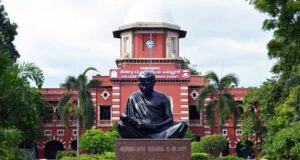
Is DAV School Government or Private?
DAV is private, not government. Most DAV schools and colleges are run by the DAV College Managing Committee, which describes itself as the largest non-governmental organisation in the field of education in India. However, some DAV institutions are government-aided, so the exact status can depend on the particular DAV school or college.
DAV is a very popular education name in India. Many parents know DAV Public School for CBSE education, discipline, English-medium teaching, moral values and a large school network. Because some DAV schools are old, reputed and sometimes connected with public-sector projects, people often assume DAV must be government. But the clear answer is: DAV is mainly privately managed, not a government school system like KVS or Navodaya.
DAV Quick Reference
| Point | Details |
| Full Form | Dayanand Anglo-Vedic |
| Main Organisation | DAV College Managing Committee |
| Type | Mostly private / non-government managed |
| Government School System? | No |
| Some Aided Schools? | Yes, some DAV schools are grants-in-aid schools |
| Main Board | Mostly CBSE, but may vary by institution |
| Ownership | DAV trust/management, not government ownership |
| Admission Mode | School or college-specific process |
| Donation Admission | Depends on institution rules; not a government centralised system |
| Known For | CBSE education, discipline, Arya Samaj values and large school network |
Why DAV’s Status Needs Clear Understanding
DAV’s status needs clear understanding because DAV is not one single school or one single college. It is a large education network. There are DAV Public Schools, DAV aided schools, DAV colleges, professional institutions and even universities under different DAV-related structures.
The DAV College Managing Committee says it runs and manages over 900 educational institutions, including public schools, grants-in-aid schools, colleges, professional institutes and research institutions. It also mentions that DAV institutions work with both public and private sectors and manage project or semi-project schools for companies and public-sector corporations.
This is why one simple answer can sometimes confuse students. A DAV Public School in one city may be private unaided. Another DAV school may be government-aided. A DAV college may be affiliated with a government university but privately managed. So the correct answer is: DAV is generally private/non-government managed, but some DAV institutions may receive government aid or work with public-sector bodies.
Why DAV Is Not a Government School System
DAV is not a government school system because it is not owned by the central government or state government like Kendriya Vidyalaya or Jawahar Navodaya Vidyalaya. Its official management body, DAVCMC, calls itself a non-governmental organisation and says it pioneered private initiative in education.
A government school system is directly created and controlled by the government. DAV is different. It is managed by DAV College Managing Committee and related DAV trust/management structures. Its philosophy is linked with Arya Samaj and the ideals of Swami Dayanand Saraswati.
This does not mean DAV is fake or unrecognised. Many DAV schools are reputed and affiliated with recognised boards like CBSE. The important point is ownership. DAV is privately managed, even if some of its schools or colleges may receive aid, affiliation or support from government systems.
How Is the Study System in DAV?
The study system in most DAV schools is structured and exam-focused. Many DAV Public Schools follow the CBSE curriculum, so students study subjects like English, Hindi, Mathematics, Science, Social Science, Computer Science and other electives as per class level.
DAV schools are usually known for discipline, regular homework, unit tests, annual exams, morning assemblies, co-curricular activities and moral education. Many schools also focus on debates, quizzes, sports, cultural programmes, science exhibitions, Olympiads and value-based learning.
A special feature of DAV institutions is their connection with Vedic and Arya Samaj values. Along with modern education, many DAV schools give importance to discipline, Indian culture, moral values and character-building. This makes the DAV environment different from many normal private schools.
How Are the Teachers in DAV?
Teachers in DAV schools are generally appointed by the school or DAV management system, depending on the institution. In reputed DAV Public Schools, teachers are usually trained and experienced in CBSE-style teaching. They handle classroom teaching, tests, homework, projects, school activities and student discipline.
However, teacher quality can vary from one DAV branch to another. Some DAV schools are excellent, with strong teachers and academic results. Some may be average, depending on location, management, fee structure, infrastructure and local leadership.
This is why parents should check the specific DAV branch before admission. The DAV name is strong, but the actual quality depends on the individual school, teachers, principal, facilities and academic culture.
Do Students Pay Fees in DAV?
Yes, students usually pay fees in DAV schools and colleges. Since most DAV institutions are privately managed, the fees are generally higher than ordinary government schools but may be lower than some premium private schools.
In government-aided DAV schools, the fee structure may be different because the institution may receive grant-in-aid support. DAVCMC also has a separate official list for DAV aided schools, showing that some DAV schools come under the aided category.
So, the fee depends on the exact DAV institution. A DAV Public School, aided DAV school and DAV college may all have different fee systems.
Advantages of DAV
- Large and trusted education network across India.
- Strong presence in CBSE school education.
- Focus on discipline, academics and moral values.
- Many branches have good teachers and strong academic culture.
- Balanced attention to studies, activities and character-building.
- Better affordability than some expensive premium private schools in many cities.
- Useful option for parents who want CBSE education with a traditional value-based environment.
Frequently Asked Questions
Q: Are all DAV schools CBSE-affiliated?
A: No. Many DAV Public Schools are CBSE-affiliated, but students should check the exact board affiliation of the particular branch before admission. Some DAV institutions may follow different boards or education structures.
Q: Is DAV better than KVS?
A: It depends on the branch and the student’s needs. KVS is a government school system with lower fees and transfer-friendly structure. DAV is privately managed and may offer strong discipline, CBSE education and better facilities in some branches. A good DAV branch can be better than an average school, but KVS has the advantage of government backing and uniform structure.
Q: Can a DAV school be government-aided?
A: Yes. Some DAV schools are government-aided or grants-in-aid institutions. That means they may receive government support, but they are still managed under DAV-related structures, not like fully government-owned schools.
Q: Is DAV good for middle-class families?
A: In many cities, DAV is considered a good option for middle-class families because it often offers CBSE education, discipline and decent facilities at fees lower than some high-end private schools. But fees differ from branch to branch.
Q: Should parents check the individual DAV branch before admission?
A: Yes. This is very important. DAV is a big network, but every branch is not the same. Parents should check board affiliation, fee structure, teachers, results, transport, safety, infrastructure and student feedback before choosing a particular DAV school.